
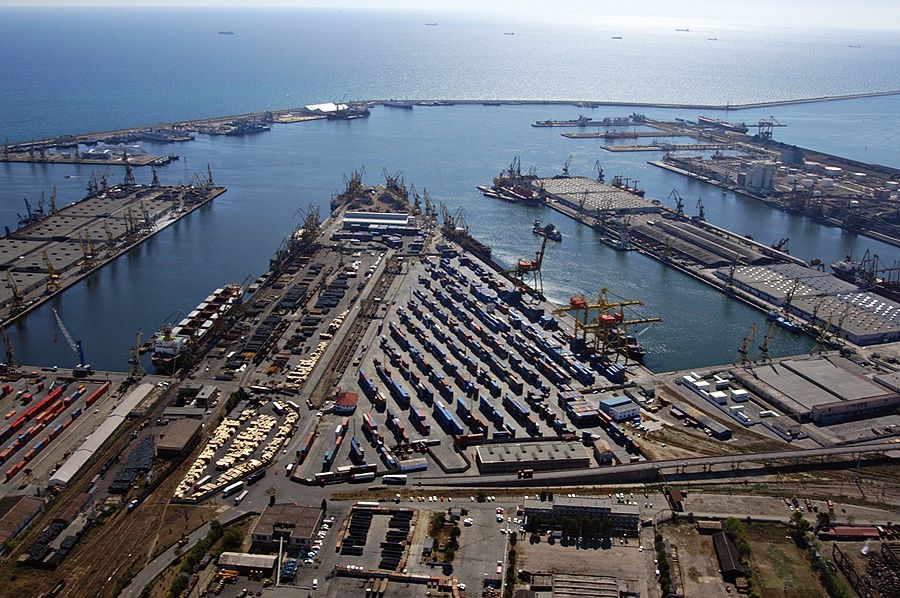
As of the end of September 2026, queues and delays in cargo acceptance persist at the Romanian port of Constanța. Experts identify customs clearance as one of the bottlenecks in the port’s operations. Due to an insufficient number of inspectors and available slots for inspections, cargo processing can be delayed.
The situation was commented on by GRANDAR Commercial Director Artem Matusevych:
«According to market participants, from September 14 to 22, a significant number of Romanian customs inspectors were undergoing training. As a result, according to carriers, only a few employees remained handling clearances, and standard procedures began taking 5–7 days instead of 2–3».
This is also partially confirmed officially: the Romanian customs service reported that from September 14–18, 15 customs inspectors and 2 observers were indeed undergoing training in the United States. Among them were specialists associated with the Port of Constanța.
Artem Matusevych notes that after September 22, the situation did not significantly normalize. That is, the inspectors’ training was rather a factor that sharply worsened an already existing problem, rather than the only cause.
The main reason is the overload of Constanța.
After the reduction/suspension of normal operations at Ukrainian deep-water ports, a huge volume of Ukrainian imports and exports went through Constanța. And this is where the bottleneck arises:
more cargo → more T1s → more customs inspections → a limited number of inspectors and inspection slots → a queue.
According to market participants, there is currently a shortage not only of personnel, but also of available slots for physical inspections. Therefore, even when an inspector is available, cargo may have to wait its turn.
As Artem Matusevych noted, previously, processing an import container could take 1–3 days, while now market participants report 1–2 weeks, and sometimes even longer.
GRANDAR urges cargo owners to take this information into account and plan cargo shipments in advance.