
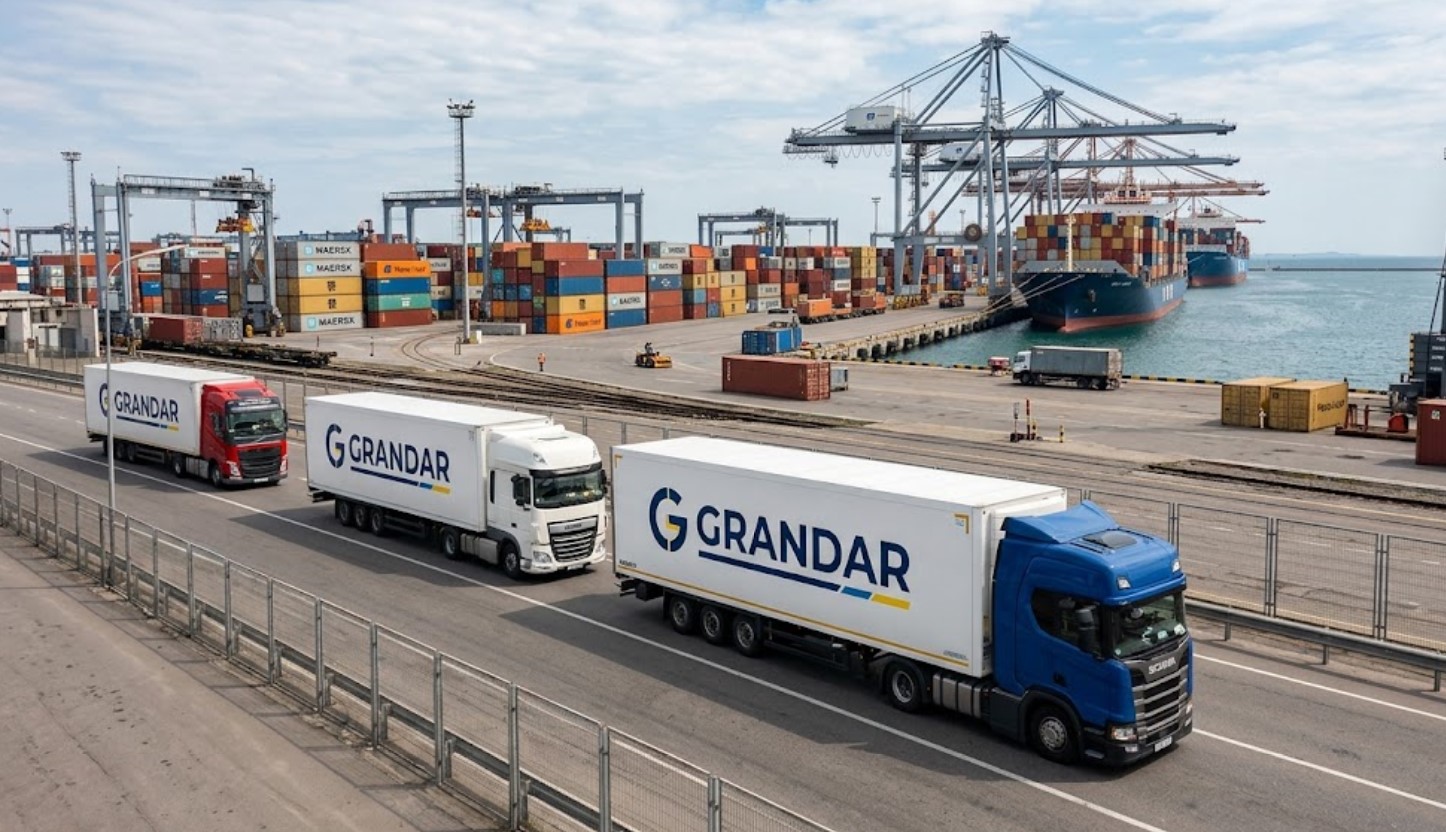
Since late July, the movement of large-capacity vessels to the ports of Greater Odesa (Odesa, Chornomorsk, Pivdennyi) has been virtually paralyzed. A number of international carriers have refused to enter these ports due to security concerns, prompting cargo flows to actively pivot toward overland and alternative maritime routes—primarily via Constanța in Romania, as well as Izmail and Reni.
What this means for the automotive market was explained by Oleksandr Toporkov, head of the automotive department at GRANDAR:
– A sharp spike in workload at road checkpoints on the borders with Poland and Romania. According to the Association of International Freight Forwarders of Ukraine, the number of outbound trucks jumped nearly 1.5 times in just a single day in early August.
– Extended waiting times at border crossings—for many destinations, delays are now measured in days rather than hours, directly impacting trip costs and fleet turnover.
– A shift of export volumes (primarily grain and agricultural products) from sea to road and rail transport, creating additional demand for rolling stock on routes that were not previously as congested.
– Rising freight rates on popular EU–Ukraine routes due to vehicle shortages and longer turnaround cycles.
For carriers and forwarders, this is a time when the following are critical:
– Flexible route planning based on the real-time situation at specific checkpoints rather than averaged data.
– Advance booking of slots and working with trusted customs brokers.
– Diversification of checkpoints and, where possible, utilizing multimodal schemes (road + ferry/rail) for time-critical cargo.
The situation continues to evolve, and the GRANDAR team will monitor border dynamics to ensure our clients and partners receive up-to-date information on schedules and routes.