
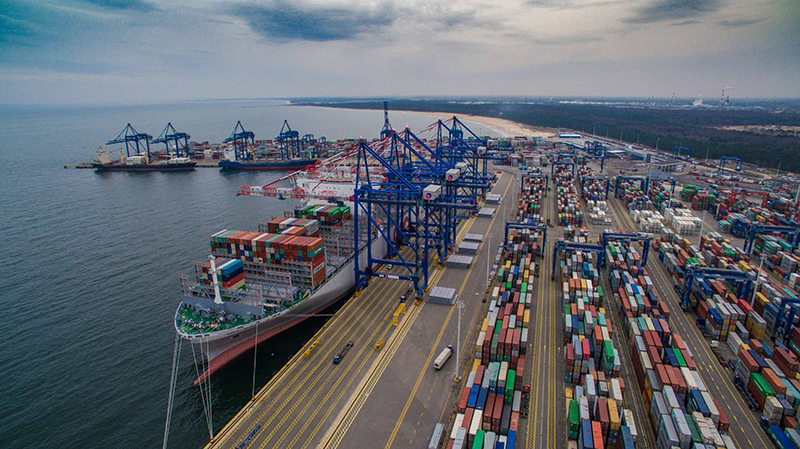
Regular strikes on warehouse terminals in Ukraine are no longer a force majeure event, but a factor that must be permanently incorporated into logistics planning. Companies are losing not only goods, but also predictability: delivery times, insurance costs, and customer trust. As Dmytro Vystavnyy, co-founder and CEO of GRANDAR, commented, one practical response to this risk is to move part of the warehousing and distribution operations abroad, primarily to Poland.
What does this mean in practice?
🔹 Inventory security. Goods are not stored in a territory where logistics infrastructure is a regular target of attacks.
🔹 A buffer and supply stability. A warehouse in the EU becomes a buffer point: cargo arrives from Asia, Turkey, or Europe, is consolidated, and then shipped to Ukraine in controlled batches – without being tied to the condition of a particular Ukrainian facility.
🔹 Faster response. If infrastructure on the Ukrainian side is damaged, logistics do not come to a halt – the route is simply rerouted through a warehousing hub in the EU.
🔹 Access to related services. Customs clearance, consolidation, cross-docking, and further distribution across the EU can all be efficiently managed from the same location.
“This is not about ‘leaving Ukraine’ – it is about diversifying the logistics route so that Ukrainian businesses can continue receiving goods on time, even when the situation inside the country is unstable. At GRANDAR, we are looking closely at this issue as we develop our network in Europe – and we see that demand for such solutions from Ukrainian companies is growing every month,” emphasized Dmytro Vystavnyy.