
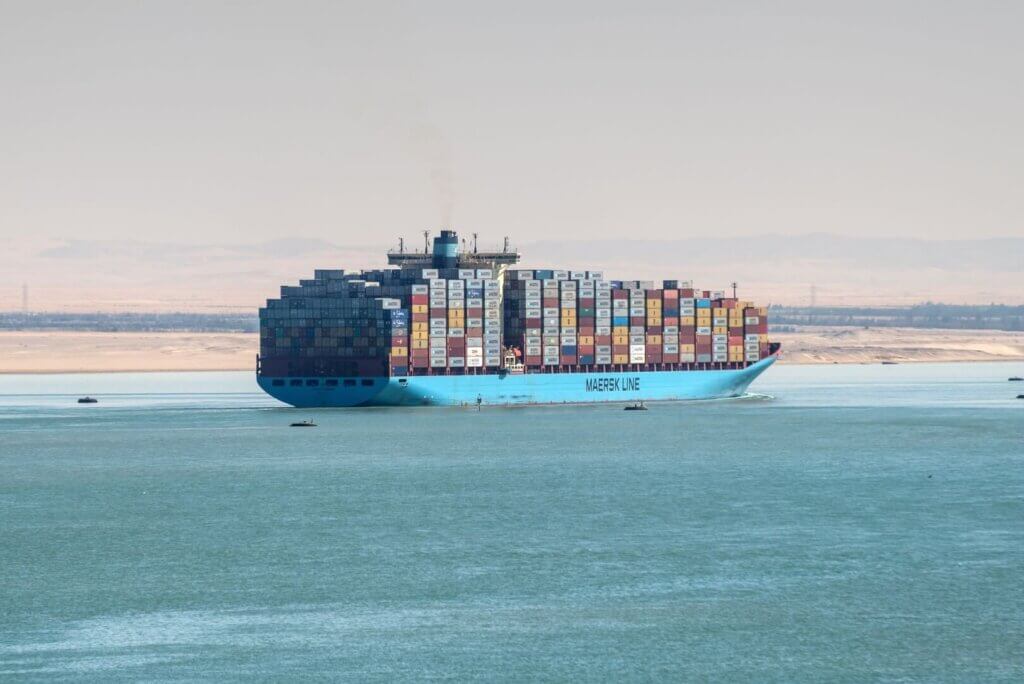
After nearly two years of bypassing around Africa, container lines are returning en masse to the Suez Canal route. However, freight rates are in no hurry to drop just yet. Let's look into why.
The return is already massive
Alphaliner analyzed the networks of the ten largest lines from September 15 to October 15. On 24 out of 46 direct Far East – Europe services, vessels have already been routing through the Red Sea. This represents 5.5 million TEU, or 63% of the total capacity on the trade lane.
The Mediterranean is recovering faster, with this figure at 70%, compared to 58% in Northern Europe. The actual picture is slightly more modest, as many services head to Europe via Bab-el-Mandeb but return around the Cape of Good Hope.
Who's back and who's not
CMA CGM virtually never left the region. MSC resumed transits only in August and now routes 11 services with a capacity of 2.2 million TEU through Suez. COSCO/OOCL, Maersk, and Hapag-Lloyd have also returned. The Premier Alliance (ONE, HMM, Yang Ming) is expected next. Out of the top ten, only Evergreen and ZIM remain on the sidelines. ZIM is holding back due to Houthi threats against Israel-linked vessels.
How long until normalcy
At the beginning of October, about 753,000 TEU per week passed through Suez. In 2023, it was approximately 1.46 million TEU, so currently, it is only half of the pre-crisis level. Linerlytica expects a full return in the first quarter of 2027. Drewry predicts that about 80% of capacity will be routing through the Red Sea by February.
Why rates aren't dropping yet
A round trip via Suez is shorter by about two weeks. The same vessels manage to carry more cargo, effectively returning around 6% of the global fleet to the market. Logically, rates should be declining.
For now, this isn't happening due to two reasons:
• Demand is growing. According to Xeneta, volumes on the Far East – Europe trade lane increased by 12.2% during the first seven months of 2026.
• Ports are congested. Bottlenecks in the networks absorb part of the released capacity.
There is another short-term risk. Vessels that opted for Suez will arrive in Europe simultaneously with those routing around the Cape. This could cause congestion lasting 2–3 weeks and even a brief spike in rates before they begin to decline.
What this means for GRANDAR clients
In the coming months, the market will be volatile, with potential delays in European ports and brief rate fluctuations. Advice from GRANDAR specialists: plan your shipments from Asia with extra time to spare and do not delay bookings expecting a quick drop in prices. The fact that the Mediterranean is recovering first is a good sign for cargo bound for Ukraine via Black Sea and Mediterranean ports.
The GRANDAR team is monitoring the situation and will help you choose the optimal route and departure time. Contact our specialists for current rates.