
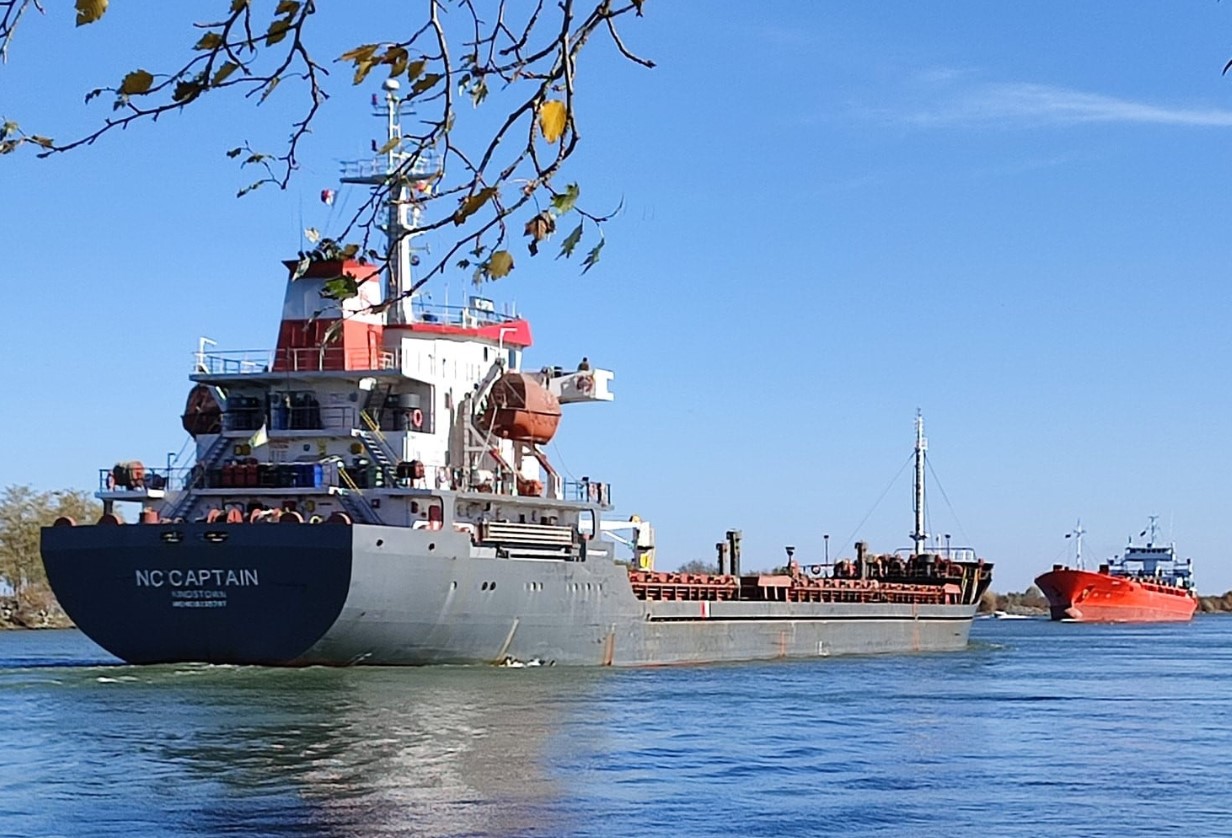
The Danube route remains one of the key corridors for Ukrainian exports, but this autumn it is operating at the limit of its capacity. As of November 9, about 95 vessels were waiting on the Sulina Channel roadstead, with another approximately 30 vessels in line to exit the Danube. As of the morning of November 11, these are the latest published figures. We explain what is happening, what the current draft restrictions are, and what cargo owners should keep in mind.
How long it will take to clear the queue
According to Kateryna Kononenko (Avalon Shipping), an expert in Danube logistics, it will take at least 10 days to reduce the queue to a minimum. This assumes that about 10 vessels pass through the channel daily. On November 9, at least 10 vessels were expected to pass upstream and 8 downstream. Therefore, if the weather remains stable and the channel is no longer closed, a noticeable relief should not be expected until the second half of November. Each closure of Sulina due to storms pushes this deadline back.
How the queue changed during the autumn
October 2 — following a nearly week-long closure due to bad weather, about 125 vessels accumulated at the channel approaches: 80 waiting to enter and 45 waiting to exit.
October 20 — about 80 vessels were at the roadstead. At the same time, the port of Reni had three vacant berths the day before: cargoes and berths were ready, but vessels could not reach them due to the queue.
November 2 — about 90 vessels waiting to enter and 20 to exit. The channel was closed to navigation for four days due to deteriorating weather.
November 9 — about 95 vessels waiting to enter and 30 to exit. The queue is growing for both entering and exiting the Danube. As a result, vessels take longer to complete each voyage, and freight rates are rising for all market participants.
Maximum safe draft (as of November 9)
Sulina Channel — 7.01 m
Bystre Mouth — 5.3 m
Izmail — 44th Mile — 6.7–6.8 m
44th Mile — Reni — Galați — 6.7 m
Galați — Brăila — 6.3 m
The water level in the Danube is gradually rising, but there is no official decision yet to increase the maximum safe draft. For comparison: at the beginning of November, the Bystre Mouth draft was indicated at 5.5 m.
What this means for cargo owners
Downtime is expensive. According to industry publications, waiting at Sulina can cost a vessel about $160,000 for 40 days. Expert Kateryna Kononenko also provided this calculation: if there are 80 vessels in the queue with an average deadweight of about 5,000 tons, approximately 400,000 tons of shipping capacity is sitting idle.
Vessels sail underloaded. Due to draft restrictions, vessels often cannot take a full cargo, making the transportation of each ton more expensive.
Priority passage. The situation is further aggravated by vessels with priority status that pass through the channel outside the general queue.
GRANDAR recommendations
Allow a time buffer. When planning shipments through Danube ports in November, keep in mind that you could wait at Sulina for at least 10–14 days.
Choose the port considering draft limits. The 44th Mile — Reni — Galați section currently has a 6.7 m restriction. For vessels with larger deadweights, Reni often remains a more convenient option.
Monitor the weather forecast. This autumn, the channel has been closed several times due to storms, and each time the queue has grown.
Consider alternatives. For part of the cargo, it is worth combining routes: container shipping, rail, or transit through Romanian ports.
The GRANDAR team monitors the situation on the Danube daily. We will help you select the optimal delivery scheme for your cargo taking into account current restrictions.