
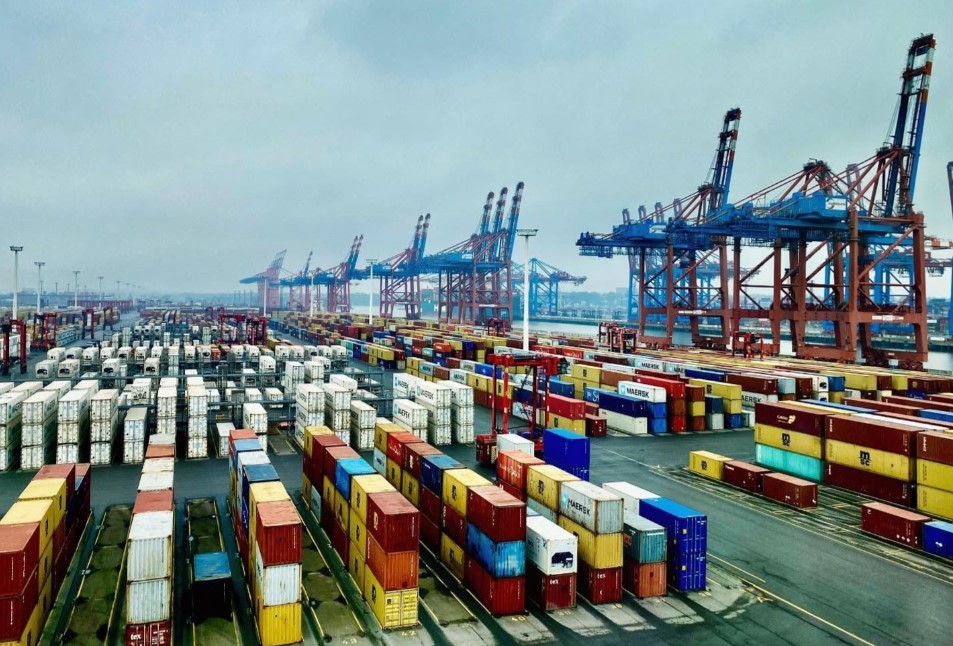
The first half of 2026 has come to an end, and certain conclusions can now be drawn for Ukraine’s maritime industry. During this period, Ukrainian ports handled 42.4 million tons of cargo. Analyzing the information landscape, we noticed an interesting trend: media reports and official statements from the Ukrainian Sea Ports Authority (USPA) and the ministry primarily focus on agricultural cargo transshipment. At the same time, the container segment, which before the full-scale war had been one of the most dynamic areas of the transportation industry, has largely disappeared from public attention.
Before 2022, the container business was one of the key drivers of Ukraine’s logistics sector. This segment stimulated large-scale investment in port infrastructure, the construction of modern container terminals, the attraction of leading international shipping lines, and the development of thousands of freight forwarding companies. The container market created opportunities not only for major operators but also for small and medium-sized businesses, including freight forwarders, customs brokers, trucking companies, inland terminals, and other participants in the logistics chain.
That is why we spoke with the co-founders of the Odesa-based logistics company GRANDAR, Dmytro Vystavnyy and Oleksiy Abramov, about the current state of the container market, the impact of the war on business, and how modern freight forwarding companies are operating today.
Dmytro Vystavnyy explained that after the start of the full-scale invasion, a significant number of freight forwarding companies were forced either to cease operations or drastically reduce their activities. Before 2022, more than 1,500 freight forwarding companies operated in the Port of Odesa alone, while Ukrainian ports were integrated into the global networks of virtually all leading international container shipping lines.
Until recently, the container market had been gradually recovering, although operating under full-scale war conditions remained extremely difficult. However, the recent intensification of enemy attacks on ports and the civilian commercial fleet has forced companies to seek new solutions that can remain economically viable for customers.
Dmytro Vystavnyy noted that container logistics is based on three key factors:
• a stable cargo flow and a balanced ratio of exports and imports;
• favorable government policy supporting transport infrastructure development;
• the willingness of international container shipping lines to include Ukrainian ports in their service networks.
The full-scale war has severely disrupted all three of these pillars. The destruction of manufacturing facilities, declining domestic demand, population migration, and high risks to maritime shipping have negatively affected the entire logistics sector.
At the same time, Ukrainian businesses have demonstrated remarkable resilience. Companies quickly redirected logistics routes through the ports of Poland, Romania, and Bulgaria, and after the opening of the Ukrainian maritime corridor, gradually resumed operations through Ukraine’s seaports. However, GRANDAR had continued operating along these alternative routes from the moment it was founded, so Dmytro Vystavnyy emphasized that the company’s specialists were fully prepared to intensify these directions once attacks on Ukrainian seaports became more frequent.
It is worth recalling that in 2023–2024, thanks to the joint efforts of government authorities, the Naval Forces of the Armed Forces of Ukraine, and representatives of the transportation industry, unprecedented measures were implemented to restore the operation of Ukraine’s seaports.
Initially, port operations were maintained under the Black Sea Grain Initiative. Later, logistics through the Danube region were developed, and eventually the full operation of seaports located in Ukrainian-controlled territory was restored. This created the conditions for the gradual return of container shipping to the ports of Chornomorsk, Odesa, and Pivdennyi.
According to available information, Ukrainian seaports handled approximately 92.5 thousand TEU in 2024, while in 2025 this figure exceeded 215 thousand TEU. During the first half of 2026, the volume reached 124.6 thousand TEU.
So, as we can see, there was a positive trend. However, this lasted only until the first half of July, when the Russian army intensified its attacks on the merchant fleet and the ports of Greater Odesa, leading to the suspension of calls by container shipping lines.
Dmytro Vystavnyy stressed that the primary prerequisite for the full recovery of the container market is security. However, this issue extends far beyond the competence of businesses.
At the same time, he is convinced that after the war ends, the container industry has every prerequisite for rapid development:
«Ukraine has already proven to the world that even under the most challenging conditions, it is capable of delivering high-quality service, operating in accordance with international standards, and remaining a reliable partner for global business.
The country’s future post-war reconstruction, large-scale investments in industry, manufacturing, and infrastructure will inevitably lead to a significant increase in container transportation. After all, container logistics is the foundation of modern international trade».
It should be noted that Dmytro Vystavnyy has worked in maritime transport and port logistics for more than 25 years, over 15 of which have been dedicated specifically to container transportation. In addition, every GRANDAR employee is a highly experienced professional with extensive expertise.
The company’s founders have gone through every stage of the development of Ukraine’s container market—from its early formation to today’s challenges.
Dmytro Vystavnyy was widely known as the founder of one of the leading companies that, before the full-scale invasion, ranked among the top three players in Ukraine’s container market. So what happened next?
According to him, even in successful businesses there are times when partners have different visions for future development. As a result, the decision was made to begin a new chapter by establishing the transport and logistics company GRANDAR.
«Today the company is only eight months old, but during this short period we have managed to build a strong team of professionals and demonstrate confident growth across all our core business areas», - Dmytro Vystavnyy said.
The company currently employs highly qualified specialists, each responsible for a specific area of logistics services.
A customs brokerage department has been established, providing customs clearance not only at the ports of Greater Odesa but also at inland terminals in Central and Western Ukraine and at border customs checkpoints.
A dedicated international road transport department organizes cargo deliveries to European Union countries as well as to Central and Central Asian and Middle Eastern states.
A railway department is also in operation, organizing rail freight transportation both within Ukraine and internationally, including to Poland.
In addition to its Odesa office, GRANDAR specialists also work from the company’s European office.
«Without question, container logistics remains one of our key business areas. During our first eight months of operation, we have demonstrated steady month-by-month growth in container transportation, international road freight, and customs clearance. For us, it is important not only to move cargo but also to build long-term partnerships. We strive to provide our clients with a level of service that not only meets expectations but exceeds them. That is GRANDAR’s main competitive advantage today», - Dmytro Vystavnyy concluded.
For his part, Oleksiy Abramov explained how modern freight forwarding companies organize their operations today:
«A successful logistics company today is no longer limited to freight forwarding at a seaport. We build a comprehensive service covering every stage of the logistics chain—from arranging international ocean freight to customs clearance, road transport, and rail transportation. Our operations have long expanded beyond the ports of Greater Odesa. We handle cargo across virtually the entire territory of Ukraine while actively developing our international business. The company has a partner in one of the European Union countries, enabling us to efficiently manage logistics processes on the European market and provide our clients with comprehensive international services. Today, customers need a single reliable partner capable of managing the entire logistics process—from shipment to final delivery. That is exactly the principle on which we build our business».
Even under the current conditions of constant enemy attacks on seaports, GRANDAR’s logistics network is capable of providing technical and technological solutions for its clients. The team guarantees results through the company’s well-established and continuously operating export and import services via Romania, Bulgaria, and Poland. These routes are not new for the company—its specialists have continuously developed them over time, and they are well-tested and operate without disruption.
GRANDAR’s story is one example demonstrating that even during wartime it is possible not only to establish a new business but also to build a professional team, expand the range of logistics services, and achieve steady growth. Companies like these are laying the foundation today for the future revival of Ukraine’s transportation and logistics industry.