
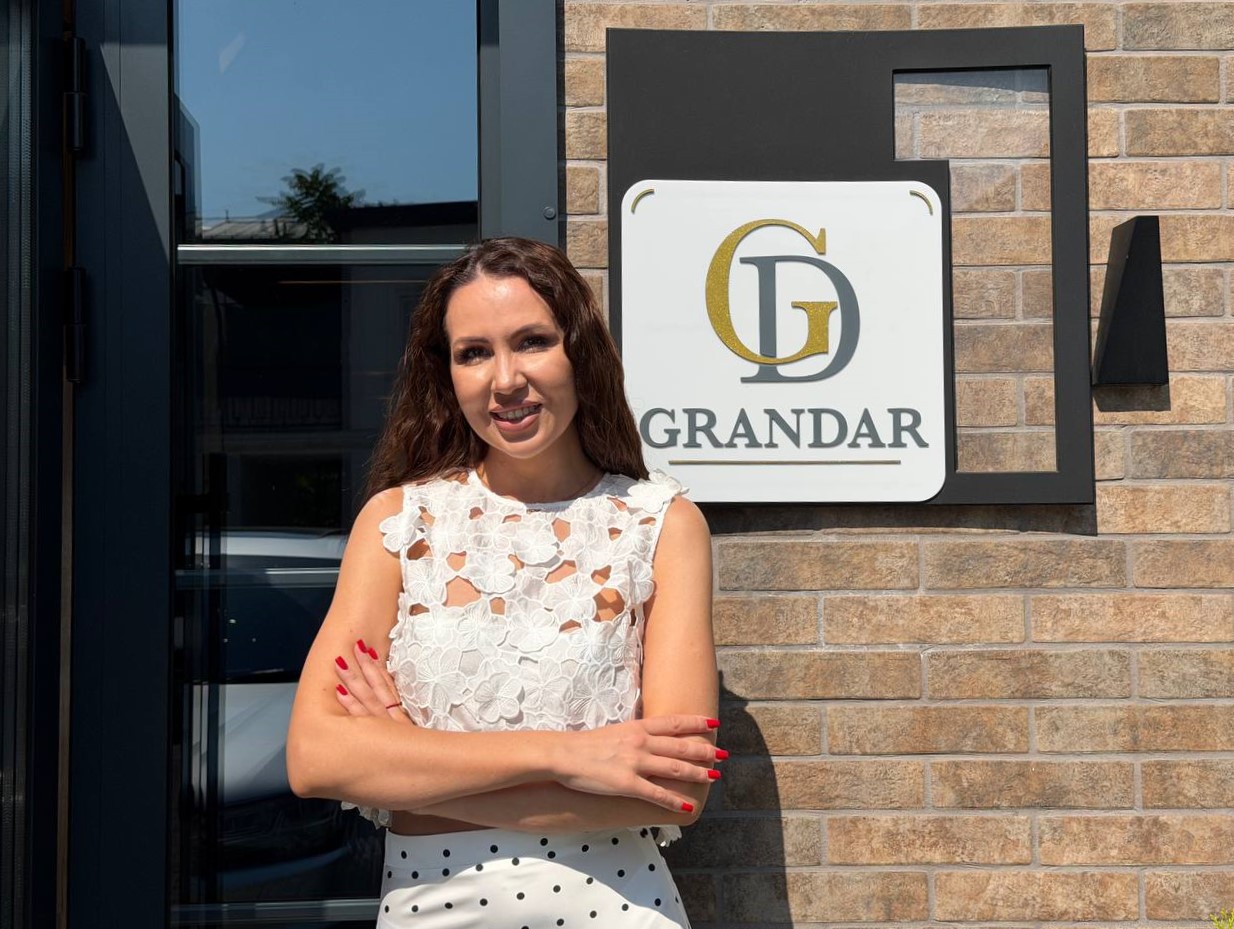
An essential part of GRANDAR’s logistics operations is its Customs Clearance Department.
Customs clearance involves much more than simply submitting a customs declaration. Before a shipment arrives, it is necessary to verify the documents, determine the correct product classification code, assess potential customs duties and taxes, identify any required permits or certificates, and choose the most appropriate customs clearance procedure. These are the responsibilities of GRANDAR’s Customs Clearance Department, headed by Halyna Poliakova.
The department’s team handles both import and export shipments, working with complex industrial and energy equipment, multi-item consignments, and non-standard product classification issues.
«We strive to become involved in a project even before the goods are physically imported. Preliminary analysis of the documentation and cargo specifications allows us to identify potential risks in advance, prepare the necessary solutions, and avoid delays during customs clearance. For us, it is important not only to clear the cargo but also to help our clients understand the entire process and achieve a predictable result», - emphasizes Halyna Poliakova.
Today, the head of the department answers some of the most common questions that may arise at the very beginning of the customs clearance process.
«Virtually every complex customs clearance case begins long before the goods reach customs. It starts when the supplier issues an invoice, transportation is booked, or the goods are loaded into a container. Most mistakes can be avoided before the shipment is even dispatched», - says Halyna Poliakova.
So, what questions may arise during customs clearance?
Is the HS code correctly determined?
The product classification code affects:
• Customs duty rates;
• VAT;
• Certification requirements;
• Required permits and authorizations;
• Potential customs risks.
Sometimes, a single digit in the code can significantly impact the overall cost and economics of the shipment.
Is there sufficient information about the goods?
Customs authorities do not assess the product name alone—they assess its characteristics.
For example:
❌ «Battery»
vs.
✅ «Lithium Iron Phosphate Energy Storage System»
These descriptions represent entirely different levels of detail. The more accurately and comprehensively the goods are described, the fewer additional inquiries are likely to arise.
Are any permits or certificates required?
Before the shipment is dispatched, it is important to determine whether the goods require:
• A certificate;
• A declaration of conformity;
• An official conclusion or expert opinion;
• A license;
• Other supporting documents.
Obtaining these documents becomes considerably more difficult once the container has already arrived at the port.
Are the commercial documents properly prepared?
Even minor inaccuracies may result in:
• Additional requests from customs authorities;
• Delays;
• Adjustments to the customs value;
• The need to amend documentation.
Has a customs broker been involved before the shipment is sent?
Very often, customs brokers are contacted only after the truck or container has already arrived. At that stage, many issues can no longer be corrected. The best time to seek professional advice is before the goods leave the supplier’s warehouse.
Conclusion
The earlier preparations for customs clearance begin, the greater the opportunity to avoid unnecessary costs, delays, and unforeseen complications.
At GRANDAR, we always recommend involving a customs broker at the stage of preparing a foreign trade transaction.
«Customs matters can be complex. Our task is to make them clear, manageable, and predictable for businesses», - notes the Head of GRANDAR’s Customs Clearance Department Halyna Poliakova.
In our upcoming publications, we will share practical materials on:
• Product classification under the Harmonized System (HS) codes;
• Preparing import and export documentation;
• Customs clearance of industrial and energy equipment;
• T1 transit declarations;
• Customs authorizations and simplified customs procedures.